
Solutions / Family Medicine and Primary Care
Sexual-health screening that fits a primary-care visit.
Add a six-analyte STI and urogenital panel to a routine visit without rearranging your schedule, your specimen workflow, or your billing.
The problem
Opportunistic STI screening is hard in primary care.
Primary care is built around chronic-disease management, intake panels, and well visits. Sexual-health screening rarely fits the rhythm — and when it's ordered as a send-out, the result lands after the patient is gone.
- 01 Routine sexual-health screening competes with chronic-care visits for finite chair time, and gets quietly deferred.
- 02 Send-out STI labs return in two to seven days, so callback labor and second-visit scheduling fall on the front desk.
- 03 Three- and four-specimen workups (urine, vaginal swab, blood) make opportunistic screening uneconomic for short visits.
- 04 Patients lost to follow-up on positive results show up later, sicker, in urgent care or the ED.
UroSure fit
Run the panel during the visit you already have.
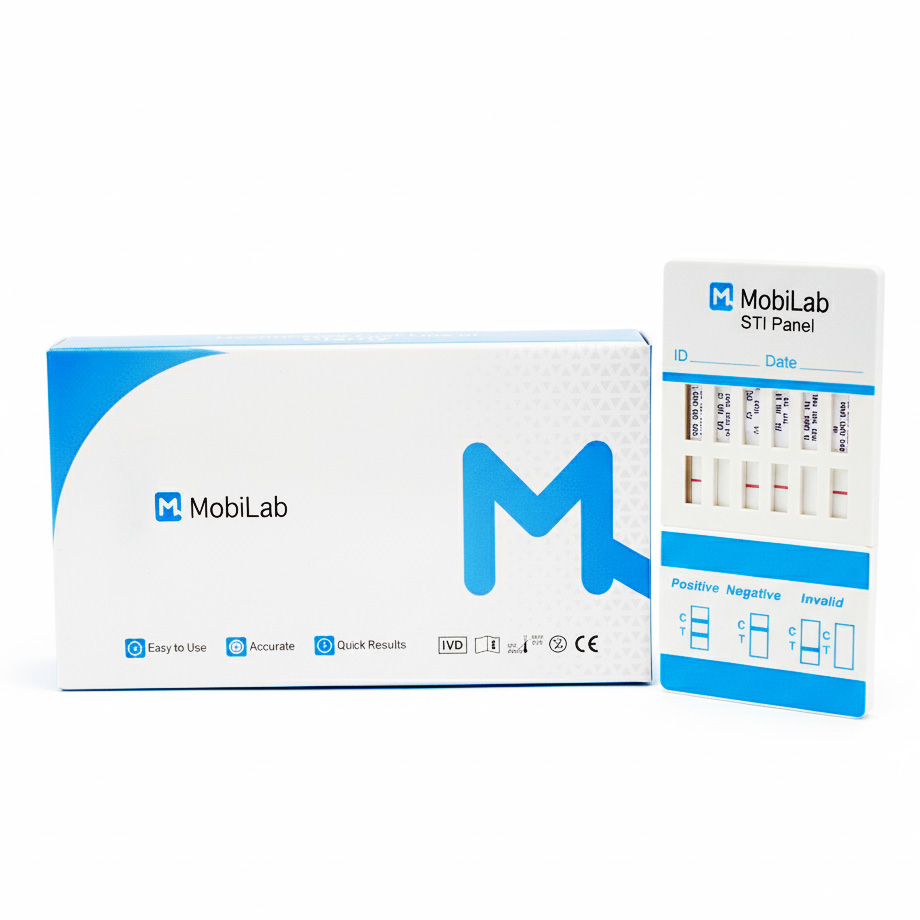
UroSure ships as a single-specimen, point-of-care urine assay. The kit slots into the intake workflow your medical assistants already run — no swab, no draw, no separate venipuncture station, no extra training certification.
01
Fit
- Add a six-analyte sexual-health screen to a new-patient intake or annual wellness visit without meaningfully extending chair time.
- One urine specimen replaces the urine-plus-swab-plus-blood combinations that used to fragment the workup.
- Result returns within the visit, so documentation and CPT coding happen in one encounter — not in a callback queue two days later.
- Same-day result removes the loss-to-follow-up gap that drives downstream urgent-care and ED visits.
02
Use cases
- New-patient intake panel for sexually active adults 18–45.
- Annual wellness visit add-on with opt-in screening.
- Symptomatic workup for dysuria, discharge, or pelvic pain.
- Pre-procedure screening when a positive result would change management.
03
Economics
- Replaces multi-CPT send-out spend with a single in-house procedure.
- Reimbursable under standard CPT codes for insured populations — see the CPT reference on How It Works.
- Adds a cash-pay menu item for self-pay patients without rebuilding your billing flow.
- Cuts front-desk callback labor by removing the second-touch result-disclosure step.
Common questions
Family Medicine and Primary Care, in detail.
01 Does UroSure replace standard urinalysis?
No. UroSure is a sexual-health and urogenital infection panel. It detects six analytes (CT, NG, TV, MG, Candida, Gardnerella). Standard urinalysis covers chemistry markers UroSure does not test — keep ordering UA when clinically indicated.
02 Can MAs run UroSure as part of intake?
UroSure is not CLIA-waived (moderate complexity), so it must be run by qualified clinical staff under a CLIA-certified site. It is not patient-self-test. Confirm staff scope with your CLIA director before deployment. Virtual training is included with the first wholesale order.
03 How does this compare to a send-out NAAT?
Detection scope is broader (six analytes vs the typical three-analyte send-out) and turnaround is roughly fifteen minutes instead of two to seven days. Whether NAAT remains preferable for any specific clinical scenario is a decision for the ordering clinician.
04 Which CPT codes apply?
Reference codes commonly used for these analytes are 87491 (CT), 87591 (NG), 87661 (TV), 87563 (MG), 87481 (Candida), and 87510 (Gardnerella). Reimbursement varies by payer. Confirm coding policy with your billing partner before submitting claims.
Next step
Bring UroSure to your practice.
Order a paid five-pack sample, or request a wholesale pricing quote sized for your practice.